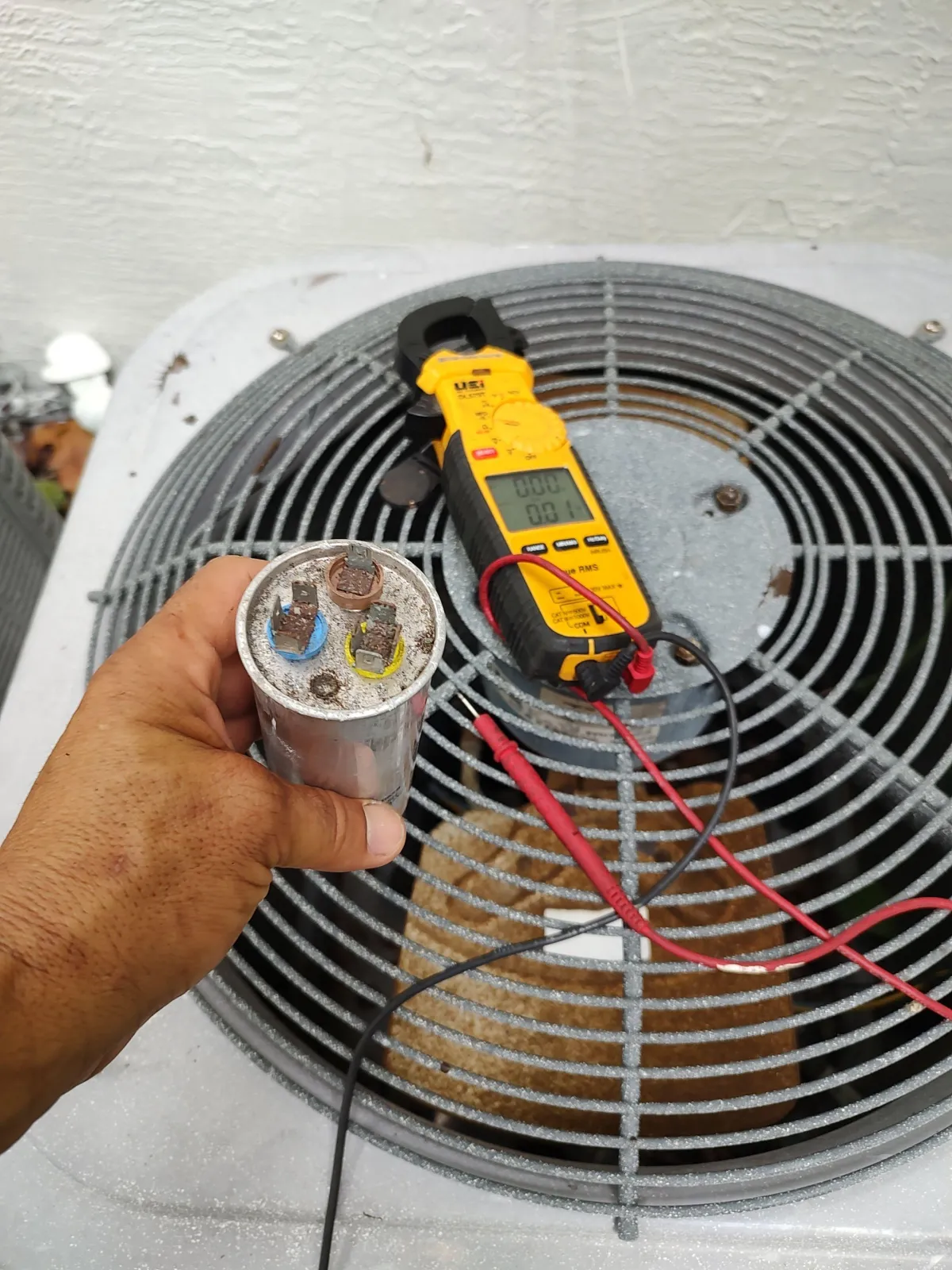
Replacing a Bad AC Capacitor" 🔧🔋 DIY Guide
"Replacing a Bad AC Capacitor" 🔧🔋 DIY Guide
Jul 09, 2024
Delray Beach, Florida
The capacitor in your air conditioning system provides the energy needed to start the compressor and fan motors. A failing capacitor can lead to inefficient operation, or worse, your AC not starting at all. Here’s how to identify the problem and replace a bad capacitor. 🌟 Signs of a Bad AC Capacitor: AC Won’t Turn On: Your air conditioner fails to start. 🚫❄️ AC Turns Off: Starts but shuts off before completing a cycle. 🌀 Humming Noise: A bad capacitor makes the compressor or fan motor hum. 🎶 Slow to Start: The AC takes longer than usual to kick in. 🕒 No Cold Air: Runs but doesn’t cool the air. 🌬️ Bulging/Leaking Capacitor: A bulging top or leaking fluid is a sign of failure. 💧 🔧 Importance of Replacing a Bad Capacitor: Prevents Further Damage: Saves the compressor and fan motor. 💡 Restores Efficiency: Reduces energy usage and bills. 💵 Improves Comfort: Ensures consistent cooling. 🌡️ 🛠️ Steps to Replace the Capacitor: Turn Off Power: Safety first. ⚠️ Locate Capacitor: Typically found in the outdoor unit. Discharge Capacitor: Discharge stored electrical energy. ⚡ Remove and Replace: Disconnect wires, replace the capacitor. 🔄 Test the System: Ensure the AC starts and runs correctly. ✅ #ACRepair #CapacitorReplacement #HVACMaintenance #EnergyEfficiency #ACTroubleshooting #HomeCooling #ProfessionalHVAC #SystemEfficiency #HVACTech #CoolingSolutions
Project Type
AC bad Capacitor
Products Used
capacitor